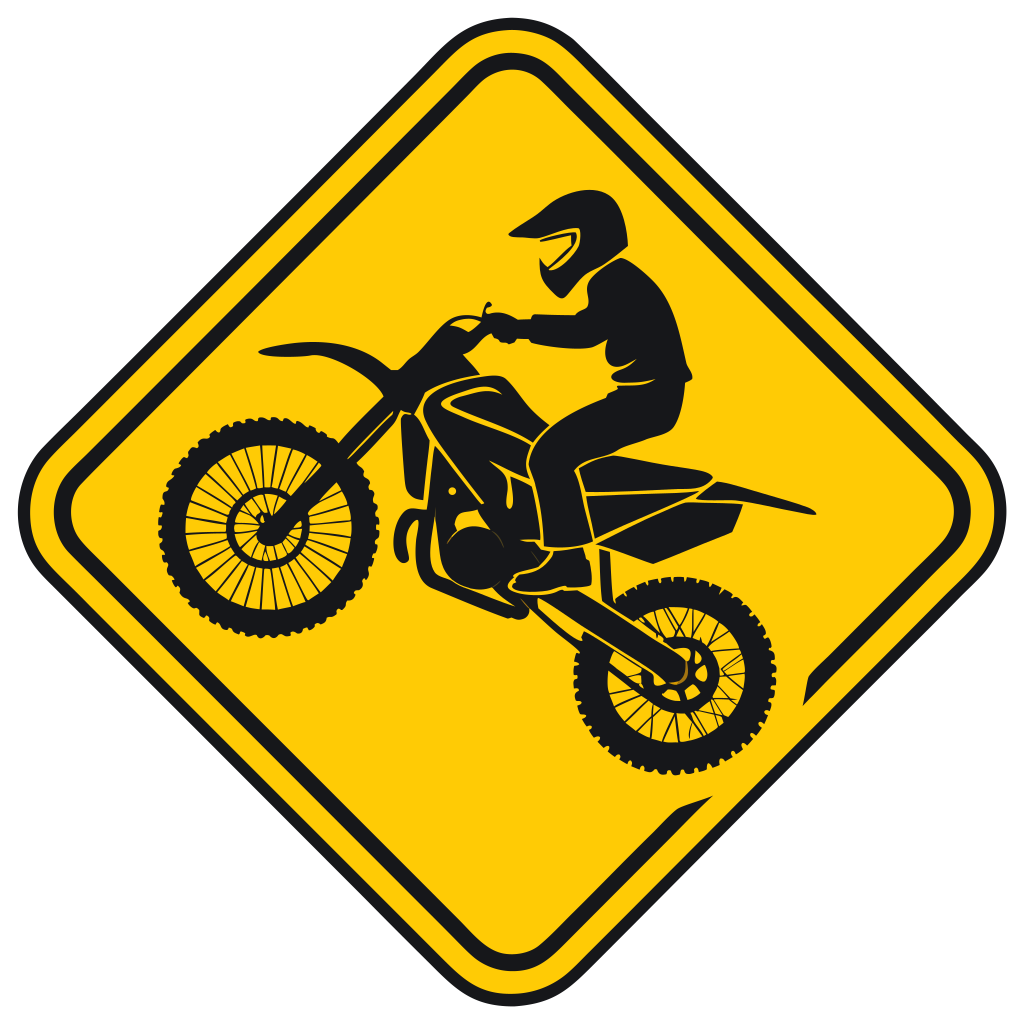
A wheelie looks like a matter of nerve. It is mostly a matter of timing: a short burst of power to lift the front, a small steady throttle to keep it there, and a rear brake to end it. Everything below is about those three things, in the order you need them.
One rule before anything else: not on a public road. It is illegal nearly everywhere, Thailand included, and the first hundred attempts are exactly the ones that go wrong. Use private ground, a closed course, or a wheelie machine.
Two ways to lift the front wheel
A power wheelie uses throttle alone: roll off, then roll on hard, and a strong enough engine lifts the front. A clutch wheelie — "clutching it up" — uses the clutch to release the engine's stored revs all at once. The clutch wheelie works on almost any bike, at lower speed, and gives the same lift every time, so it is the one to learn. The differences are covered in clutch wheelie vs power wheelie.
Before the first attempt
- Rear brake first. Sit on the bike and find the rear brake pedal with your right foot without looking. Your foot lives there for the whole wheelie. This is the habit that stops a wheelie going over backwards, and it has to be automatic before the front leaves the ground.
- One or two fingers on the clutch. You need the rest of your hand holding the bar.
- First gear. The lift is strongest and the speed is lowest.
- Sit normally, slightly back. Arms loose. You do not pull the bike up; the engine lifts it.
- Gear. Helmet, gloves, boots, back protection. Beginners fall off the back.
How to clutch wheelie, step by step
- Roll along in first gear at a steady low speed — a fast jog, around 15 to 25 km/h depending on the bike.
- Pull the clutch in just past the bite point. Not to the bar. A short pull with one finger.
- Raise the revs into the middle of the rev range while the clutch is in. This is a blip, not a wait: the whole thing takes less than half a second.
- Let the clutch out quickly and hold the throttle where it is. Quick, not a dump — your finger slides off the lever rather than snapping away. The front comes up.
- Stay on a small, steady throttle. The instinct is to slam it shut. Don't: the front drops hard and you learn nothing. Hold it for a second.
- Set it down. Ease the throttle a little, or touch the rear brake, and keep the bars straight as the wheel lands. Stay on a bit of gas when it touches so the landing is soft.
Start with lifts so small they barely count. Add revs a little at a time. The height of the wheelie is set by how many revs you carry when the clutch comes out — not by how hard you try.
Holding it: throttle and the balance point
Low wheelies are held up by acceleration, which means you keep going faster until you run out of first gear. To hold a wheelie at a steady speed the bike has to come up to the balance point: the angle where it neither falls forward nor back. Up there the throttle only needs tiny inputs, and the rear brake becomes the second control — gas tips you back, brake tips you forward, and you ride between them.
Getting to the balance point is the part that takes time, because it sits further back than anyone believes, and going looking for it on a moving bike is how people loop. See how long it takes to learn.
The mistakes, in the order people make them
| What happens | Why | Fix |
|---|---|---|
| Nothing lifts; the bike just surges | Clutch released too slowly, or revs too low | Faster release first. Then more revs. |
| Front pops up and slams down | Throttle chopped shut out of fright | Hold the throttle still for one second after the lift. |
| Yanking the bars | Trying to lift with your arms | Loose arms. The lift comes from the rear wheel. |
| Bike drifts to one side | Uneven grip, or looking down at the front wheel | Look far ahead; squeeze the tank with your knees. |
| Foot comes off the rear brake | Bracing with the legs | Go back to small lifts until the foot stays put. |
The short cut
Every step above can be practised with the bike held still. On a wheelie machine the bike is fixed to a frame, the rear wheel runs on a roller and a strap limits how high the front can rise, so you can repeat the clutch-up a hundred times in half an hour and find the balance point with nothing to lose. That is what we do in Kamala: learn to wheelie in Phuket, from 10 minutes.